
We want our standards to include input from every corner of the industry
Textile Exchange is committed to continuously improving our standards system and ensuring its alignment with the ISEAL Code of Good Practice for Sustainability Systems. This globally recognized framework provides guidance on how we develop our policies and procedures for organizational functions such as standard-setting, assurance, monitoring, evaluation, learning, data management, and claims.

Our standard-setting procedures
We develop all our standards according to our Standard Setting Procedures, which aim to ensure that Textile Exchange standards effectively achieve their intended goals and that the standard development process is inclusive, transparent, and accessible to all affected stakeholders. They also serve to align the development and revision of Textile Exchange standards with international best practices for standard setting like the ISEAL Code of Good Practice for Sustainability Systems.
Transitioning to the Materials Matter Standard
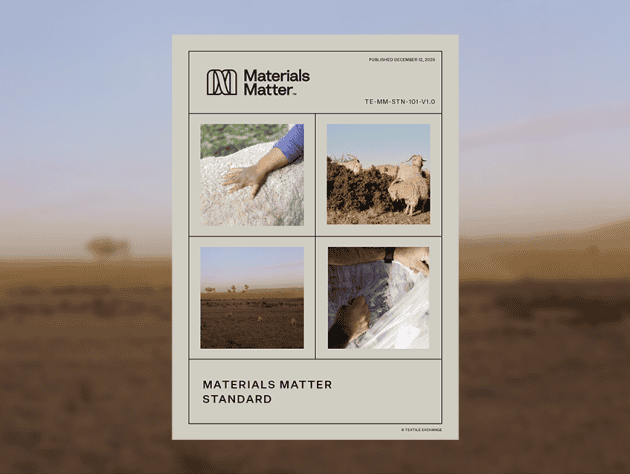
We’re currently unifying and harmonizing our current Textile Exchange standards into the Materials Matter Standard, a voluntary sustainability standard for the production and primary processing of raw materials used in the fashion, textile, and apparel industry.
For more than 20 years, we have been developing and maintaining leading material sustainability standards. Materials Matter unifies and simplifies our approach, building on the strengths of what came before while offering a more streamlined pathway forward.
We began developing the Materials Matter framework in 2021 with a clear goal: to align the ambition, rigor, and expected results across its material-specific standards and transition the industry into a more coherent, science-aligned way to measure and verify impact.
Since then, we have worked closely with stakeholders from across the supply system to design and test a framework that is both robust and workable in real-world production systems. Built on a combination of practice-based and outcome-based expectations, the standard includes comprehensive criteria for land management, animal welfare, human rights and livelihoods, and primary processing, which covers water, chemical, and energy use, as well as waste and emissions management.
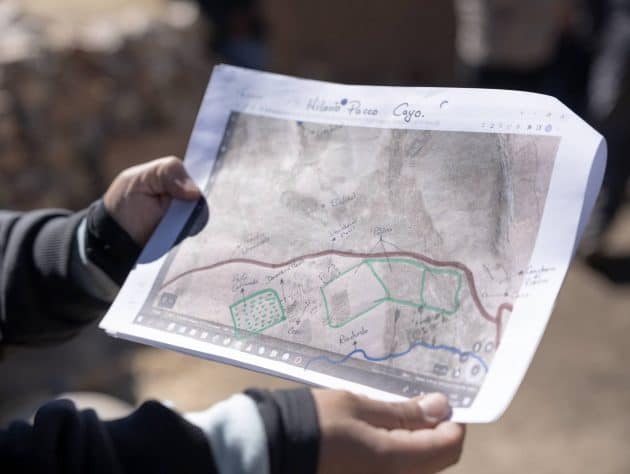
The criteria were developed over five years in close collaboration with a designated International Working Group made up of brands, retailers, suppliers, producers, NGOs, and technical specialists. Two publicly consulted drafts and a pilot version, tested in key material production regions from Peru to Italy, have helped refine the framework, alongside extensive work to ensure alignment with the ISEAL Code of Good Practice for Sustainability Systems.
At the heart of this global certification system, the Materials Matter Standard represents a significant evolution of Textile Exchange’s standards system. Its purpose is to provide a common language and shared direction for the industry, while recognizing the unique contexts of different material producers, processors, and the communities and landscapes they depend on.
The new Materials Matter Standard was published on December 12, 2025, becomes effective on December 31, 2026, and will be mandatory from December 31, 2027.

Standards Timeline
Upcoming reviews of our current standards
Our current standards are reviewed at a minimum of every five years to determine if a revision is necessary.
| Standard | Current version | Review date |
|---|---|---|
| Content Claim Standard (CCS) | 3.1, 9 June 2022 | 2024 – in progress |
| Responsible Down Standard (RDS) | 3.0, 1 July 2019 | 2025 – in progress |
| Organic Content Standard (OCS) | 3.0, 1 March 2020 | 2025 – in progress |
| Materials Matter | 1.0, 31 December 2026 | by 2030 |
International Working Group
IWG members
Each standard requires criteria approval by an International Working Group, which is a diverse independent decision-making body composed of stakeholders relevant to the standard and may include non-governmental organizations, brands, retailers, farmers, supply chain members, industry associations, and topical experts.
Facilitating balanced decision-making on the content of a standard, the composition of the IWG will vary with each new standard revision. This allows each IWG to be uniquely structured based on the development needs of the standard.
For more information on the composition of the IWG and its role, see our Standard Setting Procedures.
Geography
EMEA – Europe, Middle East, and Africa
Americas – South, Central, and North America
APAC – Asia Pacific/Oceania
Industry
Raw material producers including farms
Supply chain companies
Brands and retailers
Certification bodies
Civil society
Climate
Soil health
Biodiversity
Water resources
Animal welfare
Human rights
Communities and smallholders
All International Working Group members
Andean Pastoral Livelihood Initiative (APLI)
Aquafil S.p.A.
Bureau Veritas CPS
Inditex, S.A.
Control Union Certification
Donglong Home Textile Co., Ltd.
Eastman Chemical Company
FILASUR S.A.
FOUR PAWS
ISKO
GEETANJALI WOOLLENS PVT LTD
Kathmandu
Lenzing
LVMH
Patagonia Inc.
Soil Health Institute
TAL Apparel Ltd.
The Schneider Group
The North Face
USB Certification
Verité, Inc.
* It is important to note that IWG membership does not signify that each organization fully agrees on decisions taken for the final content in the standard. IWG membership is intentionally designed to bring different perspectives together for open discussion and therefore is likely to result in diverse opinions. Decisions are first taken by consensus but may move to vote when consensus is not reached. As the entity ultimately responsible for the standard, Textile Exchange reserves the right to make final decisions regarding standard content and shall publicly disclose any decisions, including reasoning, that differ from the quorum of the IWG.
Share your feedback
We’re committed to constant improvement. That’s why we’ll be offering multiple opportunities for the public to provide feedback throughout our standards revision cycles. You can share yours through our Standards Feedback Form. We’ll be opening public consultations as we revise our key documents too.